



What We Can Learn From Top Brands Already In The Metaverse
It is impossible to look to the future without seeing the metaverse as part of our lives. There are some massive opportunities waiting for those who are willing to adapt and innovate. Perhaps it is too early for most business owners to realize how important the metaverse will be, but I’d like to change that.
Let’s take a look at how some top brands are taking advantage of the power of the metaverse and what we can learn from them. The metaverse is going to lead to huge changes in our lives without a doubt, and the sooner we learn to adapt to it, the better.
I’ve listed the brands in no particular order, as they have all approached the metaverse in their own ways. This should serve as a great starting point to learn more about how you can get started in the metaverse with your own business. Keep in mind that many other brands are also jumping into this, but I wanted to mention some of the biggest brands.

Nike
There are very few sports apparel brands that have grown to Nike’s level of popularity and influence. Last year, the brand decided to create its own world on Roblox, one of the most popular virtual world platforms. It’s called Nikeland, and people can create avatars, play games and interact with each other there. It offers a perfect virtual gaming and social world that revolves around the Nike brand.

Adidas
Adidas is another powerhouse sportswear brand that understands the importance of jumping into the metaverse. In 2021, Adidas launched its own NFT drop in partnership with NFT giants such as Punks Comic and Bored Ape Yacht Club.
I think Adidas is doing something very bold by taking on the NFT craze that seems to be so polarizing. The good thing about this is that it gives more people confidence in the value of the metaverse and all things related to it (NFTs being a huge aspect).

Coca-Cola
How could you expect one of the biggest and most powerful brands in the world not to get into the metaverse? Just like Adidas, Coca-Cola set its sights on the value of NFTs and the many ways they can be used for brand power. The brand ran an inaugural NFT campaign that offered “loot boxes” containing all kinds of virtual goodies. This gave it the chance to test out the acceptance of the NFT approach with great results.
It is evident that NFTs are becoming a huge part of many brands’ metaverse strategies. Keep in mind that NFTs will be a very relevant part of the metaverse. They will likely be the most reliable way for anyone to prove ownership of anything they showcase within the metaverse.

Gucci
Just like Nike used Roblox for its journey into the metaverse, Gucci did the same thing when it sold a virtual handbag there in 2021. And impressively, the bag commanded a higher price than its real-world counterpart. Just imagine how much power the metaverse holds when an item that only exists in a virtual world can be so valuable.
This is a perfect example of how NFTs are very useful and why a virtual handbag is of real value: A virtual handbag can be used by a person’s avatar in the metaverse or it could be sold at a store in the metaverse. This kind of value is why top brands are betting on the value of NFTs.
What Do All Of These Brands Have In Common?
One of the main things that all of these brands have in common is their ability to adapt to change. All of them have been around for over 50 years. This means that they have been able to learn and adapt to new and important changes. Any business that is looking to survive and thrive in the modern world needs to adopt this posture.
How Can Smaller Brands Start To Adapt To The Metaverse?
It is essential for business ventures of all sizes to be able to understand the value and importance of the metaverse. It truly does allow for a whole new level of engagement.
The first step could be to learn more about how the metaverse works. Once you understand the core functions, you can start to brainstorm ideas that could help your business get involved.
A good way to do this is to learn about platforms like Roblox that offer an experience that shows how the metaverse works as far as the potential to interact with your target audience. You can also take advantage of immersive technologies such as virtual reality and augmented reality to enhance the experience.
Final Thoughts
I cannot stress enough the importance of finding ways to take advantage of the metaverse. All business ventures, regardless of their size, are going to need to look for ways to adapt to the new era. The metaverse is a vast virtual world of opportunities, and this makes it a very exciting and important consideration.


The Metaverse And NFTs: What Agencies And Brand Leaders Should Know
There is no question that technology is undergoing a large number of changes that are going to affect us in many ways. Some of the changes will be positive, and some may a bit more questionable, but we are going to need to learn how to deal with them all the same.
In this article, I’m going to talk about the metaverse and non-fungible tokens and what agencies and brand leaders should consider as they look for ways to showcase their products and services in the virtual world.

What Is The Metaverse?
It sounds like some kind of comic book term, but the metaverse is a reality that many of us already know to a certain extent. The metaverse is basically the world where your digital self can reside. Your digital self is what is known as an avatar, and it is able to move around and interact with other people who also have their own avatars in the virtual world.
We have been doing this for many years in video games like Fortnite and Roblox, and it has become even more engaging with virtual reality. It is important to understand that virtual reality probably won’t be required to become part of the metaverse. What VR will likely do is enhance the way you experience the metaverse, but you also could use a regular screen where you can operate your avatar.
That said, both virtual reality and augmented reality will no doubt be key elements of the metaverse. Many activities will probably be much more engaging with the use of both VR and AR.
At this point, you can already attend virtual events with your avatar and interact with other people in a VR setting. The metaverse is likely going to expand this to a much more interactive and massively promoted alternate reality.

Facebook Becoming Meta
There are many people who are wondering what is going to happen to Facebook now that the company’s new name will be Meta. (To be clear, the social media platform itself will still be called Facebook; just the company’s name is changing.) While there will probably be some enhancements to Facebook, the metaverse is going to be something much broader in which Facebook exists and not something exclusive to Facebook.
The Connection Between The Metaverse And NFTs
The main connection between the metaverse and NFTs is related to digital assets and how they are given value. The metaverse will allow people to showcase digital forms of art and property, and NFTs will allow them to put a price on that content with proof of ownership.

While NFTs use the same blockchain technology that cryptocurrencies use, they’re not a type of currency themselves. Each NFT is attached to a specific item. That item could be a painting, video game content, music or anything else that can be attached to that specific token. This is ideal for digital assets, and NFTs have turned into a great way for artists and creators in general to monetize their work.
There are many NFT marketplaces that allow you to buy and sell NFTs, and this is quickly becoming a phenomenon that is taking many industries by storm. The subject is too complex to cover in a single article, but this gives you a very basic idea of what NFTs are and how they work.
Now that I have explained NFTs, it is important to understand that NFTs are very likely to become the optimal currency for the metaverse. They are going to allow people to show proof of ownership of all kinds of things in the metaverse. Imagine something like a deed to a property that only exists in a virtual world. The NFTs would act as that deed.
NFTs could also be the perfect access points for specific events and benefits that people can enjoy inside the metaverse. The applications and the potential seem endless, and this is what makes the idea so attractive.
What Does All This Mean For Brands?
Given that the metaverse is a representation of the real world in a virtual setting, there is no question that it will open a world of opportunities for brands to thrive. Preparing for the impending changes caused by the metaverse will no doubt be essential for success. Brands can start to create virtual representations of their products now to ensure that they can be found by other people in this new universe.
We are essentially going to be living two different realities: one is the offline world that we’ve always known, and the other will be a virtual representation of the world around us. Being able to be found by your customers in both of these worlds will be crucial for success.
Final Thoughts
We are taking the first steps toward what is going to become the ultimate way for people to interact with each other in a virtual environment. The metaverse is going to be a truly unique and drastic way to upgrade our digital experiences. This is why it is important for agencies and brand leaders to know how it is going to work and why NFTs are going to play such an important role.
The one thing that we can expect is that this technology will become a very important part of our lives in the years to come.
The Benefits Of Augmented Reality In Retail And E-Commerce
There is no question that we are moving into a much more dynamic and interesting age, thanks to technology such as augmented reality (AR). As we’ve seen firsthand from the work we do within our own agency, the creation and fine-tuning of AR has turned into an incredibly powerful tool that has now reached the world of retail and e-commerce, and I am going to talk about the main reasons why this has become such an important tool.
Detailed Views
One of the things that has always been better about shopping offline is that people can look at the products they want to buy. They can see the product up close, and this allows them to make a decision without having to assume anything.
On the other hand, shopping online usually means that you have to base your decision on images and videos, but never on something that you can inspect in detail. Perhaps some people would argue that this is the last great thing about offline shopping that online shopping can’t match.
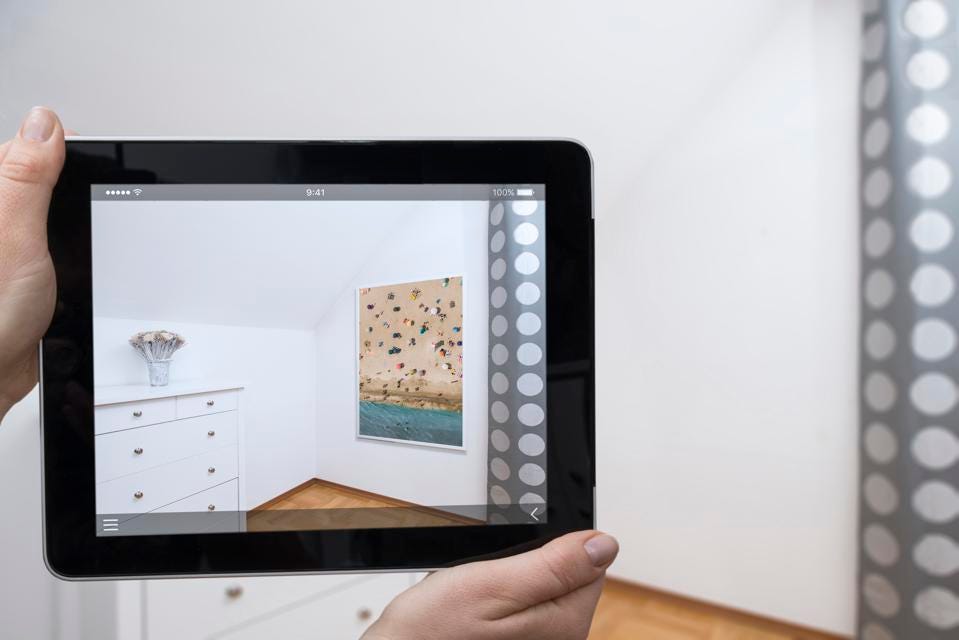
Now that AR has reached such impressive levels, we are now able to preview products through our phones or tablets in a way that makes it seem as if we are right there touching them.
For example, say you are considering buying a new bicycle. With AR, it would now be possible to preview it on full scale and take a look at every angle, from every perspective you want and really look close into all the details.
This is an incredibly powerful way to enhance the online shopping experience, and it takes away the one factor that has been most relevant about offline shopping. This means that the world of e-commerce is slowly but surely taking the best parts of the offline experience and making them available to a certain extent for those who are shopping online.
Product Previews
While online shopping is still quite popular in many parts of the world, there are many shoppers who are still unable to consider buying an item unless they can see how big it is, what it looks like from all angles and if it has the right look for their home.
Companies: Now Is Not The Time To Defund DEI
AR now also allows you to preview how any piece of furniture would look in your home on a full scale. For example, if someone is looking to buy a lamp, they can preview what that lamp is going to look like on their desk by making use of AR. Not being able to make those calculations is a very common conversion hurdle that can lead to a loss in sales, but AR gives the online storeowner the tools to avoid losing that potential buyer. It is thanks to this level of immersion that many brands are taking their online sales to a whole new level.
Nike’s AR add-on is a great example of this as they are now able to give customers a full preview of their shoes from every possible angle. The software puts them right on your feet for a perfect preview of how they would look on you. This is known as try-on augmented reality and it has turned into a massively appealing feature for those who shop online.
Other large and popular brands are also adapting this technology to their online stores. This has created a huge increase in online conversions that boosts engagement and sales.
Adapting To AR
This technology is changing the way people shop, and e-commerce stores should consider providing an AR solution for their shoppers. Not only is this going to be crucial for optimal conversions, but it also attracts a large number of offline shoppers who feel that online shopping is too impersonal.
Now that we can see firsthand just how powerful this technology can be, there is no question that many e-commerce business owners are going to look for ways to invest in implementing this technology. This is the perfect time to get started as AR is still quite new and those who get involved now can capitalize on this technology.
It’s important to look for an experienced team that can help you make this transition. AR can be quite complex for those who don’t understand how it works, but someone with experience can help you take your entire catalog of products and turn it into an AR showcase.
The cost of setting up AR for an online shop is going to depend on the level of detail and interaction expected. This is one of the factors that will determine the cost of this implementation.
AR Shopping Will Be The Norm
I predict that AR will become a normal way to shop in every store in the next five to 10 years, without a doubt. This means that those who get involved in the next few years are the ones that will likely benefit the most.
Once this becomes a widespread service online, the appeal will no longer attract people to specific online stores because everyone will be offering the same thing. This is a pattern that happens all the time.
Final Thoughts
We have yet to see the full potential of augmented reality, but one thing we can all agree on is that it has already changed the way that people shop on the web. The coming years are going to be very important, as they will show us other layers of immersion in the world of AR. All that matters at this point is that everyone is aware of the importance of adapting to this technology.

Everyday inspired by the Beauty of the Mountains
Take your time.
I’ve got a Fujifilm X100s. It runs about $1300. It’s easily the best camera I’ve ever owned. I take care of it as best as I can, but I don’t let taking care of it impact the photography. Let me elaborate on that a bit better. You’ll get better at each section of what we talked about slowly. And while you do, you’ll be amazed at how much easier it all is and how the habit forms. The best way to get better at photography is start by taking your camera everywhere. If you leave your house, your camera leaves with you. The only exception is if you’re planning for a weekend bender — then probably leave it at home. Other than that, always have it slung over your shoulder. It would probably help to get an extra battery to carry in your pocket. I’ve got three batteries. One in my camera, one in my pocket, one in the charger.
When it dies, swap them all.
For me, the most important part of improving at photography has been sharing it. Sign up for an Exposure account, or post regularly to Tumblr, or both. Tell people you’re trying to get better at photography. Talk about it. When you talk about it, other people get excited about it. They’ll come on photo walks with you. They’ll pose for portraits. They’ll buy your prints, zines, whatever.
Clouds come floating into my life, no longer to carry rain or usher storm, my sunset sky.
— Rabindranath Tagore
Breathe the world.
I’ve got a Fujifilm X100s. It’s easily the best camera I’ve ever owned. I take care of it as best as I can, but I don’t let taking care of it impact the photography. Let me elaborate on that a bit better. You’ll get better at each section of what we talked about slowly. And while you do, you’ll be amazed at how much easier it all is and how the habit forms. The best way to get better at photography is start by taking your camera everywhere. If you leave your house, your camera leaves with you. The only exception is if you’re planning for a weekend bender — then probably leave it at home. Other than that, always have it slung over your shoulder. It would probably help to get an extra battery to carry in your pocket. I’ve got three batteries. One in my camera, one in my pocket, one in the charger. When it dies, swap them all.
For me, the most important part of improving at photography has been sharing it. Sign up for an Exposure account, or post regularly to Tumblr, or both. Tell people you’re trying to get better at photography. Talk about it. When you talk about it, other people get excited about it. They’ll come on photo walks with you. They’ll pose for portraits. They’ll buy your prints, zines, whatever.
Heavy hearts, like heavy clouds in the sky, are best relieved by the letting of a little water.
— Christopher Morley
Enjoy the morning.
The best way to get better at photography is start by taking your camera everywhere. If you leave your house, your camera leaves with you. The only exception is if you’re planning for a weekend bender — then probably leave it at home. Other than that, always have it slung over your shoulder. It would probably help to get an extra battery to carry in your pocket. I’ve got three batteries. One in my camera, one in my pocket, one in the charger. When it dies, swap them all.
For me, the most important part of improving at photography has been sharing it. Sign up for an Exposure account, or post regularly to Tumblr, or both. Tell people you’re trying to get better at photography. Talk about it. When you talk about it, other people get excited about it. They’ll come on photo walks with you. They’ll pose for portraits. They’ll buy your prints, zines, whatever.
It’s easily the best camera I’ve ever owned. I take care of it as best as I can, but I don’t let taking care of it impact the photography. You’ll get better at each section of what we talked about slowly. And while you do, you’ll be amazed at how much easier it all is and how the habit forms.
There are absolutely no rules of architecture for a castle in the clouds and this is real.
— Gilbert K. Chesterton
Free your mind.
The best way to get better at photography is start by taking your camera everywhere. If you leave your house, your camera leaves with you. The only exception is if you’re planning for a weekend bender — then probably leave it at home. Other than that, always have it slung over your shoulder. It would probably help to get an extra battery to carry in your pocket. I’ve got three batteries. One in my camera, one in my pocket, one in the charger. When it dies, swap them all.
I’ve got a Fujifilm X100s. It’s easily the best camera I’ve ever owned. I take care of it as best as I can, but I don’t let taking care of it impact the photography. Let me elaborate on that a bit better. You’ll get better at each section of what we talked about slowly. And while you do, you’ll be amazed at how much easier it all is and how the habit forms.
For me, the most important part of improving at photography has been sharing it. Sign up for an Exposure account, or post regularly to Tumblr, or both. Tell people you’re trying to get better at photography. Talk about it. When you talk about it, other people get excited about it. They’ll come on photo walks with you. They’ll pose for portraits. They’ll buy your prints, zines, whatever.

Interview with Acer's Chainman Jason Chen
Jason Chen has been Chairman and CEO of Acer since 2017. From 2014 to 2017 he served as Corporate President and CEO and played a pivotal role in driving Acer’s corporate transformation and diversification into new business areas.
The Genius XR team had the opportunity to sit and chat with Mr.Chen at the Montreal's C2 annual event.
In this interview, Mr. Chen talks in detail about CONCEPT-D, the brand's"premium high-end desktops, notebook PCs and monitors designed for professional and amateur creators. We also speak about Quantum computing and the future of XR's technologies at Acers, while numbering the obstacles in those domains.

Interview with David Cox (MIT-IBM AI Research Lab)
David Cox is the Director of the MIT-IBM Watson AI Lab, a first-of-its-kind industry/academic collaboration between IBM and MIT focused on fundamental research in artificial intelligence.
The MIT-IBM Watson AI Lab is focused on fundamental artificial intelligence (AI) research with the goal of propelling scientific breakthroughs that unlock the potential of AI.
We've had the chance to discuss with Mr.Cox at the C2's 2019 annual event. We talked with him about Quantum computing and the XR's technologies.

Genius XR & TeleFilm Canada partner @ Canada House SXSW 2020
Genius XR & TeleFilm Canada partner @ Canada House SXSW 2020


We are honored to be Official Creative Partners at @ Canada House SXSW 2020!
Canada House, powered by Telefilm Canada, is bringing Canada’s signature cool back to Austin’s sizzling SXSW scene for its second year in a larger-than-before edition. The initiative brings together Canada’s film, tech, and music sectors under one roof to promote the strength of Canada’s creative industries and show the world what we have to offer in terms of partnerships and industry support.
“Everything’s bigger and better in Texas, as they say, and this year, Canada House is no exception,” said Christa Dickenson, Executive Director at Telefilm Canada. “We have assembled a dynamic range of industry partners and programming, highlighting the many reasons why working with Canada is a must for anyone looking for quality creatives and to expand their audience.”
Located this year at The Venue from Sunday, March 15 to Thursday, March 19, Canada House will be an eco-responsible business and event space that puts Canada’s innovation and creativity on the map, through diverse and inclusive programming. Each day will feature a series of panels, presentations, and talks, as well as music performances by some of Canada’s hottest and emerging talents.
Canada House’s details are as follows:
Where: The Venue (516 E 6th St, Austin, TX 78701)
When: Sunday, March 15 – Thursday, March 19
- 2:00 pm – 2:00 am (Sunday)
- 10:00 am – 2:00 am (Monday through Thursday)
Facebook Event: https://www.facebook.com/events/763889890780758/

The Interactive Lounge @ Canada House SXSW 2020


Brought to you by Genius XR and Telefilm Canada #RDVCANADA 🍁 🎥
Link to Event: https://www.facebook.com/events/194727354924764/
The Interactive Lounge is a showcase of Canada's leading interactive studios and creators; Global Leaders pushing the boundaries of possibilities.
Immerse yourself in the very best of Canada's leading narrative-driven, export-ready immersive entertainment.
From the very first 360° film, showcased at Expo 67 and still shown at Epcot Center, to the Canadian Space Arm; all the way to IMAX and Java technologies, Canada has a Tradition of always being at the forefront of Technological Innovation.
Come discover why the World works better when Canada is involved.
Featured Studios / Creators
Felix & Paul Studios (Gymnasia)
Tribe of Pan - Immersive Studio (The Choice)
Cream Productions
Flipside XR
Cococucumber (Riverbond)
XRMG (2020 Youth Olympics AR)
Genius XR (Gettysburg: A Nation Divided)
Thierry Loa ( 21-22 Alpha)
Interactive Lounge @ Canada House SXSW 2020
Présenté par Genius XR et Téléfilm Canada #RDVCANADA 🍁 🎥
Lien vers l'événement: https://www.facebook.com/events/194727354924764/
Le salon interactif est une vitrine des principaux studios et créateurs interactifs du Canada; Les leaders mondiaux repoussent les limites des possibilités.
Plongez-vous dans le meilleur des divertissements immersifs axés sur la narration et prêts pour l'exportation.
Du tout premier film à 360 °, présenté à Expo 67 et qui est toujours présenté au Centre Epcot, au Bras spatial canadien; jusqu'aux technologies IMAX et Java, le Canada a la tradition d'être toujours à la pointe de l'innovation technologique.
Venez découvrir pourquoi le monde fonctionne mieux lorsque le Canada est impliqué.
Studios / Créateurs en vedette
Felix & Paul Studios (Gymnasia)
Tribe of Pan - Immersive Studio (The Choice)
Cream Productions
Flipside XR
Cococucumber (Riverbond)
XRMG (2020 Youth Olympics AR)
Genius XR (Gettysburg: A Nation Divided)
Thierry Loa ( 21-22 Alpha)
Nous sommes fière d'être partenaires créatifs de Canada House SXSW 2020 !
Canada House de retour chez nos voisins du Sud pour SXSW
Propulsée par Téléfilm Canada, Canada House ramène le côté décontracté légendaire du Canada sur la scène effervescente de SXSW à Austin pour une deuxième année, dans une édition plus riche que jamais. L’initiative réunit sous un même toit les sphères du cinéma, de la technologie et de la musique du Canada afin de mettre en valeur la force des industries créatives canadiennes et de montrer au monde entier ce que le Canada a à offrir en matière de partenariats et de soutien à l’industrie.
« Tout est plus grand et meilleur au Texas, comme on dit, et cette année, Canada House ne fait pas exception », a déclaré Christa Dickenson, directrice générale de Téléfilm Canada. « Nous avons réuni un groupe dynamique de partenaires de l’industrie et préparé une programmation du tonnerre, illustrant les nombreuses raisons pour lesquelles travailler avec le Canada est un impératif pour quiconque recherche du contenu créatif de qualité et qui désire élargir son public. »
Installé cette année à The Venue du dimanche 15 mars au jeudi 19 mars, Canada House sera un espace écoresponsable dédié aux affaires et aux événements, où l’innovation et la créativité canadiennes seront mises en lumière grâce à une programmation diversifiée et inclusive. Une série de tables rondes, de présentations et de causeries sera proposée chaque jour, et des performances musicales seront offertes par certaines des étoiles montantes du Canada.
Voici les coordonnées de Canada House :
Où : The Venue (516 E 6th St, Austin, TX 78701)
Quand : dimanche 15 mars – jeudi 19 mars
- 14 h – 2 h (dimanche)
- 10 h – 2 h (lundi au jeudi)


Five Ways To Incorporate Virtual Reality Into Your Marketing Campaign

Virtual reality and 360-degree virtual reality: Everyone seems to be talking about it nowadays. But what is it exactly, and how does it work? First, you must know that there are two sides to the VR coin:
- Virtual Reality (VR): Virtual reality is computer generated, like a game or a 3D render of architecture. These software-generated virtual images are realistic and can replicate real environments or imaginary ones. In virtual reality, you look around and interact in a computer-generated experience.
- 360-Degree VR Video: 360-degree video is an immersive experience filmed with several video cameras mounted to capture activity happening all around, creating a spherical video. These experiences are like virtual reality where you can look around and even interact, depending on the platform used. Like panoramic pictures, this gives the sensation of being at the location and being immersed in it.
Virtual reality and 360-degree VR video are still so new that you may not be sure about how to integrate it into your marketing and sales strategy. At my digital agency, we've been working with VR for three years. To ease your way into the world of VR, we created this list of the top five ways to incorporate VR into your marketing campaigns:
 1. Create 360-Degree Or VR Content
Virtual reality is the perfect medium to create immersive and compelling content that inspires. The most important social media platforms, Facebook and YouTube, are 360-degree VR video ready. It should not be a surprise that these tech giants are spearheading the VR and 360-degree video movement: Facebook purchased Oculus in 2014 and is heavily investing in VR, and Google just releasedDaydream View (VR headset) and Daydream VR, a mobile VR platform.
You have worked hard to establish a presence on those platforms; now is the opportunity to lead your industry by creating VR or 360-degree content. The easiest way is to create 360-degree pictures and videos with amateur cameras, such as the Theta or Samsung 360. The more complex options include high-quality cinematic and computer-generated virtual reality, which can also include 360-degree spatial sound.
2. Give Away Branded VR Cardboards
You’re not trying to attract millennials with coffee mugs and key chains, are you? The VR cardboard headset is the ultimate giveaway because it has a long-lasting “wow" effect. Not only can your potential client enjoy your immersive VR experience with the cardboard, but they can then use your headset to view 360-degree VR video on YouTube. You have just taken that person by the hand and brought them to a new, VR world.
We recently worked on a 360/VR campaign with a client that incorporated branded VR cardboards. The goal was to attract 18- to 30-year-old students to a new concept retail location. The presented problem was: How do we show what the retail space looks like? We proposed creating 360-degree VR video, capturing the new space and adding title overlays as explanations. We published the VR content on YouTube and sent out activation teams to universities for a pop-up shop VR experience. This way, students were able to try a VR headset and see what the space looked like. Once interested, they were directed to a new location and offered a giveaway: the branded VR cardboard.

3. Use VR At Tradeshows And Events
VR headsets are still a relatively new concept that most people have seen or heard about, but have yet to try. Setting up a mobile VR station inside your booth or at an event is a great way to attract people and attention. Viewers will be amazed, spectators will be intrigued, and everyone will line up to try your VR experience. This will also provide great content for your followers on social media: Write about it, take pictures and create videos.
4. Broadcast Live 360-Degree VR Video
Live streaming video as part of your social media efforts is another cutting edge use of the technology. YouTube allows us to stream 360-degree VR video content that can be watched on a VR headset. This is a totally new way of interacting with your audience, as they are immersed into your live world. In June, we helped a public art festival to broadcast live in 360 degrees: We placed a camera right in the middle of the festival and streamed it live on YouTube.
There is also a premium version that you can offer (pay-per-VR) on your VR app. Live 360-degree VR video streaming of a concert, complete with 360-degree spatial sound, is a beautiful experience. This is also very big for sports broadcasting: This year, the NBA teamed up with NextVR to live stream 25 NBA games on Samsung VR.
5. Develop A VR App
Creating a VR app allows you to have enhanced experiences, such as interaction, movement and calls-to-action. The app allows you to customize the VR experience in ways that a 360-degree VR video on YouTube can't. For example, a real estate VR app could be used to provide interactive tours of properties. In essence, a VR app is a great platform for exclusive experiences that need more than just a play-and-pause interaction.
Conclusion
VR is still new, but it continues to grow. New hardware is continuously being released, and companies like Google, HTC, Oculus and Samsung have joined forces to create the Global VR Association. As a content creator, I am very excited, and see VR as the next storytelling platform.

360 Virtual Reality: The Ultimate Storytelling Platform
The art of marketing is essentially the art of storytelling. The basic goal of marketing, its raison d’être, is to tell a story that will create an emotion in order to influence an action. I strongly believe – as many around the world do – that virtual reality as a storytelling platform is the ultimate emotion creator.
There is simply no way, next to physically transporting someone into a real-life experience, to convey emotions and generate emotional responses the way VR enables us to. Take the old saying about a picture being worth a thousand words, combined with the 2014 Forrester Research study which asserts that one minute of video is worth 1.8 million words, and then add the immersive qualities unique to the VR experience. The combination of these elements makes up a powerful tool to tell and share your message.
In April, manufacturers, broadcasters, content creators and storytellers gathered at the National Association of Broadcasters Show in Las Vegas to discover the latest creation tools, as well as to be inspired by industry leaders during challenging talks, discussion panels and workshops. From journalism to cinema and live broadcasting, it was clear that 360VR is quickly being adopted as the next platform to tell the most compelling stories.
Virtual reality was front and center during the show, as was made evident by the first image seen by show attendees: a mobile VR headset. In my opinion, this is due to the broadcast potential of mobile VR. Thanks to microprocessing technology’s constant growth and advancements, the mainstream future of VR is rapidly evolving from a tethered experience to a mobile experience. Early this year, the GSMA predicted that there will be 5 billion mobile subscribers by this summer.

The numbers don’t lie: Samsung shipped nearly 5 million Gear VR headsets in 2016, while Google shipped more units of the Daydream View in two months than Oculus did throughout the year. The mobile VR platforms are coming into their own quite rapidly in order to supply the oncoming onslaught of content. Because out of all the VR headsets, 98% of them were for mobile VR.
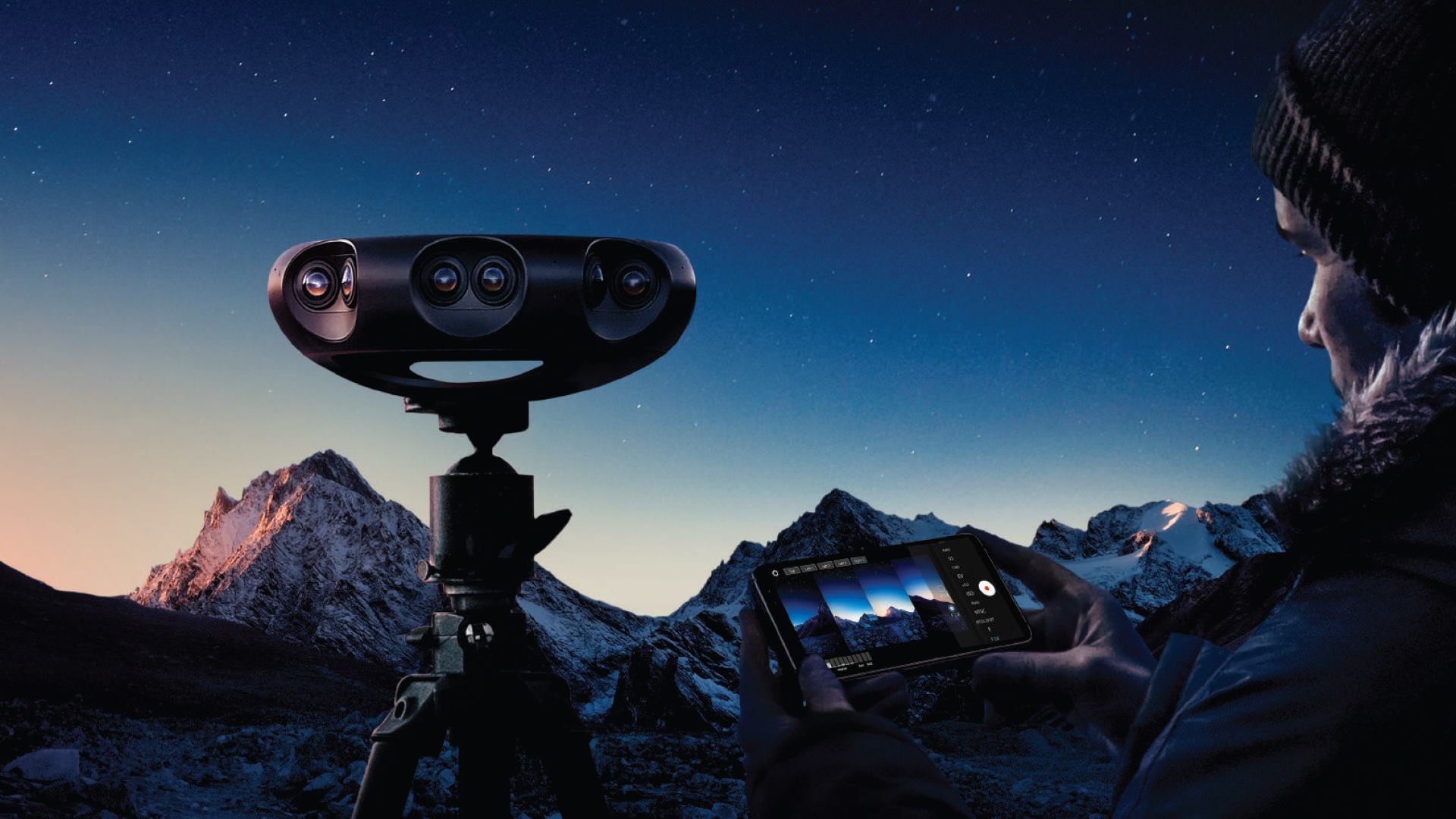
Samsung is the current front runner of the content and manufacturer wars based on those sales numbers, the 600+ apps it boasts, and by having been out of the gate much sooner than Google. They have made the creation and sharing of 360° content easy and accessible (read: social) to all through their Gear 360 camera. The best-in-show camera is Samsung’s latest innovation, the first pro-level livestream-ready stereoscopic 360° camera. The Samsung 3D 360 will perfectly work with the new live stream platform, VR Pass Live.
That being said, Google’s strategy is not manufacturer/content-driven; Google wants its Daydream Platform/Operating System to be the backbone of VR. This was made evident via the Google I/O 2017 announcements: The updates coming via Daydream 2.0, that Samsung S8 will be part of the 11 Daydream-compatible smartphones by end of year, Google Seurat technology, and most important of all, Google WorldSense.


The proper tools make the result and there were lots of great tools for creators to peer at and try out at the NAB Show. As experienced storytellers, we were excited to see the latest and greatest solutions for 360° cinematography and VR.
And when it comes to solutions, we prefer Mettle. We’ve been using their products ever since the very first plugin and have never looked back. For over a decade, we have put all our trust in the G-Technology content storage solutions so it came with zero surprises when we found out that its products were being used by cloud storage services around the world. A proper stabilizer solution is crucial, and we tested a few. For “first-person” type of footage, the Feiyu Technology G360 is simple to use and does the job. This only works with smaller cameras for now, such as the Samsung Gear 360 camera. For larger-scale projects, where a camera the likes of Nokia OZO is going to be used, the remote-controlled Mantis 360° from Motion Impossible solution has worked great for us thanks to its fully modular build that allows you to use it in multiple ways.
A happy editor makes for better content. This is why we decided to scale down and simplify. The aforementioned G-Tech products allow for easy management of footage. Portability has become a huge factor for us so “all-in-one” solutions have taken over more traditional recording rigs. The H5 portable recorder from ZOOM has gone from backup to the main solution because of its ease of use and replaceable microphone capsules.
These are the types of solutions that you can depend on so that you can concentrate on the message to be delivered. When it comes to delivering messages, a multi-platform approach will always be preferred. Traditional video, television and movie formats are not going anywhere anytime soon. Just like the arrival of smartphones, virtual reality is not meant to “replace” any of these mediums, but rather add and enhance their multi-platform capabilities. The existence of one format does not signify the disappearance of another.
When a new platform for storytelling appears before us, we need to take notice and find the best ways to use it to tell our brand or product’s story. Virtual reality allows us to forge an emotional connection with our targeted audience like no other format, making VR the ultimate storytelling platform. Some have even referred to VR as the “last” platform (the only more immersive experience would entail getting plugged-in like Neo in The Matrix).
Mobile VR is where I urge marketers to focus their energy and budgets. Not only because it is where the industry giants, manufacturers and broadcasters seem to be directing their energies and budgets, but because it makes your virtual experiences available to a larger scale, enabling you to create a deeper relationship with your audience. This is something you can only get with VR, the ultimate storytelling platform.
C2 Montréal Recap with our VR Robot
C2 Montréal is a rendez-vous As each year, the Genius XR team is thrilled to be part of the C2 Montréal event.
As much as meeting the other creatives and doers of the city, this is also a perfect opportunity to connect and collaborate with potential business partners from around the world.
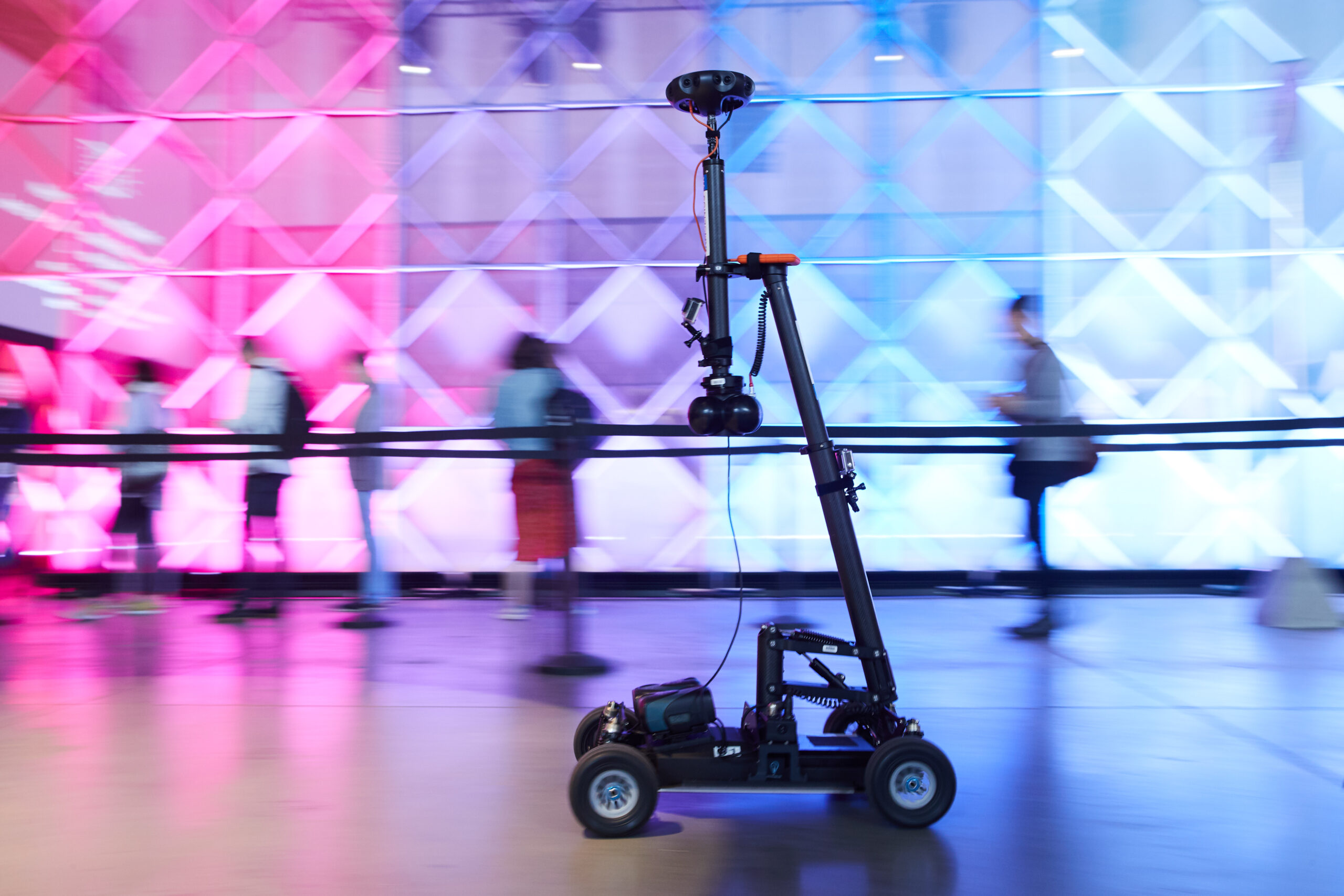
Watch the C2 Montréal Recap with our Robot 🤖 M360