


The Benefits Of Augmented Reality In Retail And E-Commerce
There is no question that we are moving into a much more dynamic and interesting age, thanks to technology such as augmented reality (AR). As we’ve seen firsthand from the work we do within our own agency, the creation and fine-tuning of AR has turned into an incredibly powerful tool that has now reached the world of retail and e-commerce, and I am going to talk about the main reasons why this has become such an important tool.
Detailed Views
One of the things that has always been better about shopping offline is that people can look at the products they want to buy. They can see the product up close, and this allows them to make a decision without having to assume anything.
On the other hand, shopping online usually means that you have to base your decision on images and videos, but never on something that you can inspect in detail. Perhaps some people would argue that this is the last great thing about offline shopping that online shopping can’t match.
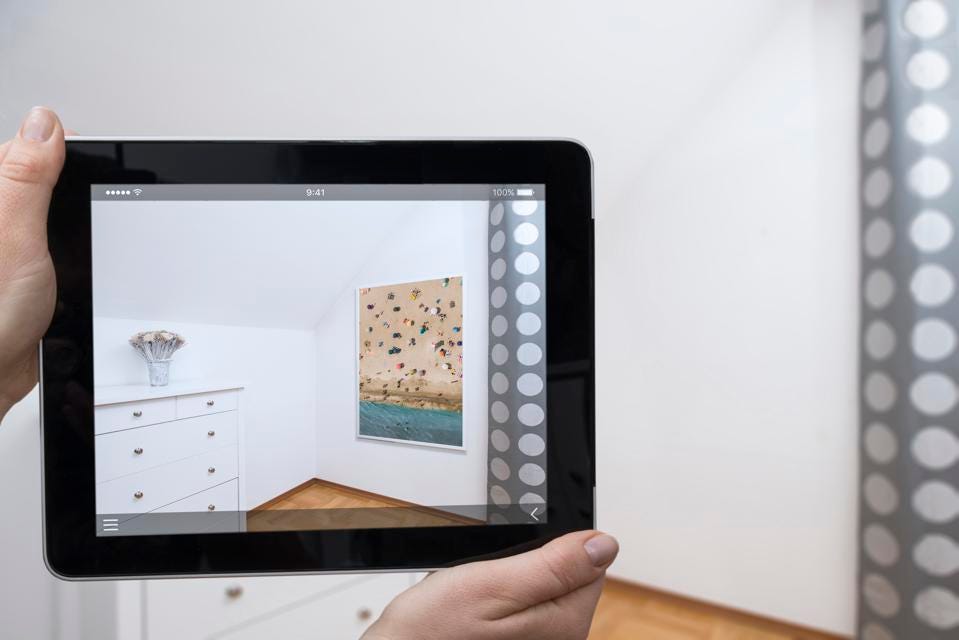
Now that AR has reached such impressive levels, we are now able to preview products through our phones or tablets in a way that makes it seem as if we are right there touching them.
For example, say you are considering buying a new bicycle. With AR, it would now be possible to preview it on full scale and take a look at every angle, from every perspective you want and really look close into all the details.
This is an incredibly powerful way to enhance the online shopping experience, and it takes away the one factor that has been most relevant about offline shopping. This means that the world of e-commerce is slowly but surely taking the best parts of the offline experience and making them available to a certain extent for those who are shopping online.
Product Previews
While online shopping is still quite popular in many parts of the world, there are many shoppers who are still unable to consider buying an item unless they can see how big it is, what it looks like from all angles and if it has the right look for their home.
Companies: Now Is Not The Time To Defund DEI
AR now also allows you to preview how any piece of furniture would look in your home on a full scale. For example, if someone is looking to buy a lamp, they can preview what that lamp is going to look like on their desk by making use of AR. Not being able to make those calculations is a very common conversion hurdle that can lead to a loss in sales, but AR gives the online storeowner the tools to avoid losing that potential buyer. It is thanks to this level of immersion that many brands are taking their online sales to a whole new level.
Nike’s AR add-on is a great example of this as they are now able to give customers a full preview of their shoes from every possible angle. The software puts them right on your feet for a perfect preview of how they would look on you. This is known as try-on augmented reality and it has turned into a massively appealing feature for those who shop online.
Other large and popular brands are also adapting this technology to their online stores. This has created a huge increase in online conversions that boosts engagement and sales.
Adapting To AR
This technology is changing the way people shop, and e-commerce stores should consider providing an AR solution for their shoppers. Not only is this going to be crucial for optimal conversions, but it also attracts a large number of offline shoppers who feel that online shopping is too impersonal.
Now that we can see firsthand just how powerful this technology can be, there is no question that many e-commerce business owners are going to look for ways to invest in implementing this technology. This is the perfect time to get started as AR is still quite new and those who get involved now can capitalize on this technology.
It’s important to look for an experienced team that can help you make this transition. AR can be quite complex for those who don’t understand how it works, but someone with experience can help you take your entire catalog of products and turn it into an AR showcase.
The cost of setting up AR for an online shop is going to depend on the level of detail and interaction expected. This is one of the factors that will determine the cost of this implementation.
AR Shopping Will Be The Norm
I predict that AR will become a normal way to shop in every store in the next five to 10 years, without a doubt. This means that those who get involved in the next few years are the ones that will likely benefit the most.
Once this becomes a widespread service online, the appeal will no longer attract people to specific online stores because everyone will be offering the same thing. This is a pattern that happens all the time.
Final Thoughts
We have yet to see the full potential of augmented reality, but one thing we can all agree on is that it has already changed the way that people shop on the web. The coming years are going to be very important, as they will show us other layers of immersion in the world of AR. All that matters at this point is that everyone is aware of the importance of adapting to this technology.


360 Virtual Reality: The Ultimate Storytelling Platform
The art of marketing is essentially the art of storytelling. The basic goal of marketing, its raison d’être, is to tell a story that will create an emotion in order to influence an action. I strongly believe – as many around the world do – that virtual reality as a storytelling platform is the ultimate emotion creator.
There is simply no way, next to physically transporting someone into a real-life experience, to convey emotions and generate emotional responses the way VR enables us to. Take the old saying about a picture being worth a thousand words, combined with the 2014 Forrester Research study which asserts that one minute of video is worth 1.8 million words, and then add the immersive qualities unique to the VR experience. The combination of these elements makes up a powerful tool to tell and share your message.
In April, manufacturers, broadcasters, content creators and storytellers gathered at the National Association of Broadcasters Show in Las Vegas to discover the latest creation tools, as well as to be inspired by industry leaders during challenging talks, discussion panels and workshops. From journalism to cinema and live broadcasting, it was clear that 360VR is quickly being adopted as the next platform to tell the most compelling stories.
Virtual reality was front and center during the show, as was made evident by the first image seen by show attendees: a mobile VR headset. In my opinion, this is due to the broadcast potential of mobile VR. Thanks to microprocessing technology’s constant growth and advancements, the mainstream future of VR is rapidly evolving from a tethered experience to a mobile experience. Early this year, the GSMA predicted that there will be 5 billion mobile subscribers by this summer.

The numbers don’t lie: Samsung shipped nearly 5 million Gear VR headsets in 2016, while Google shipped more units of the Daydream View in two months than Oculus did throughout the year. The mobile VR platforms are coming into their own quite rapidly in order to supply the oncoming onslaught of content. Because out of all the VR headsets, 98% of them were for mobile VR.
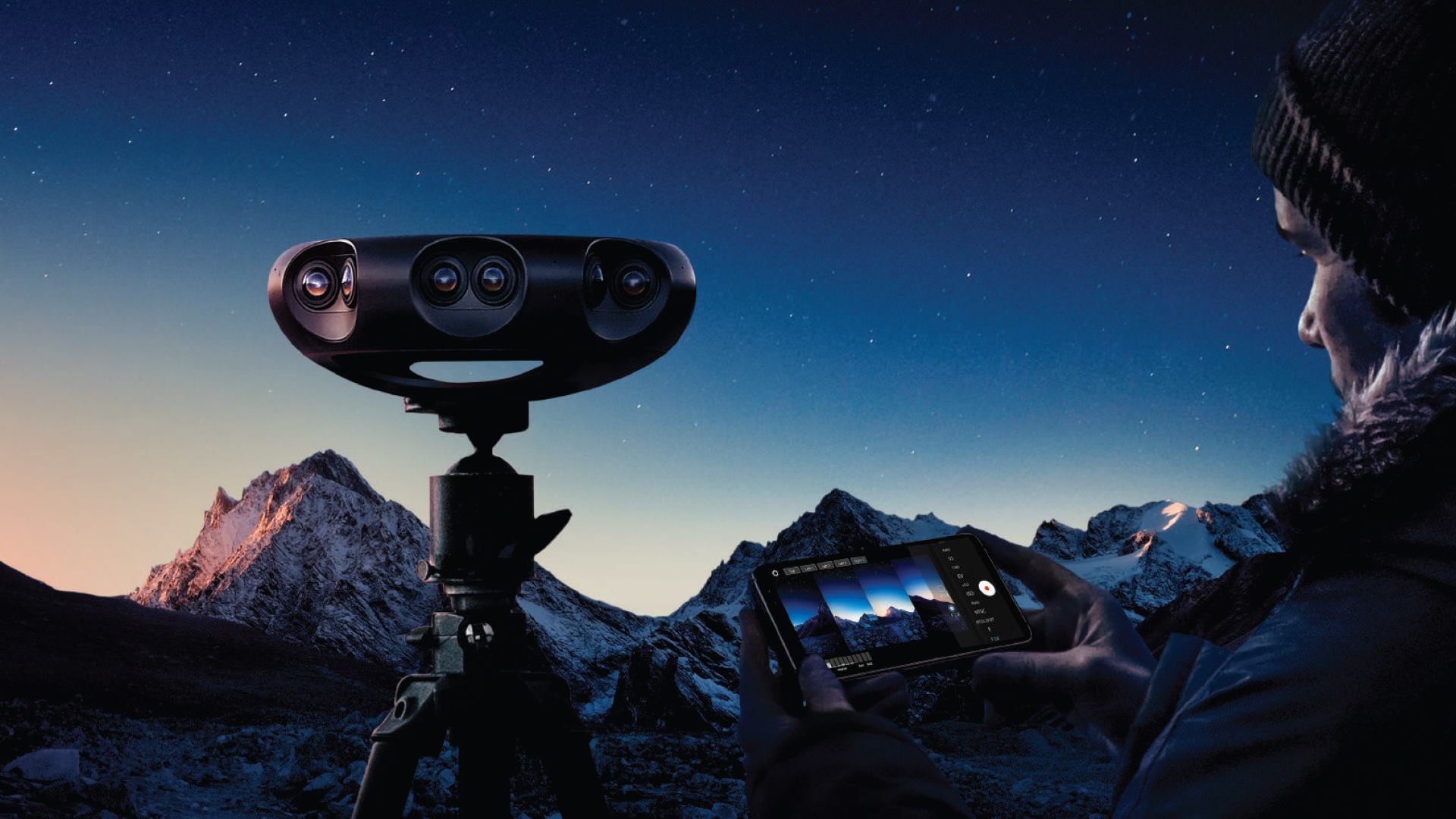
Samsung is the current front runner of the content and manufacturer wars based on those sales numbers, the 600+ apps it boasts, and by having been out of the gate much sooner than Google. They have made the creation and sharing of 360° content easy and accessible (read: social) to all through their Gear 360 camera. The best-in-show camera is Samsung’s latest innovation, the first pro-level livestream-ready stereoscopic 360° camera. The Samsung 3D 360 will perfectly work with the new live stream platform, VR Pass Live.
That being said, Google’s strategy is not manufacturer/content-driven; Google wants its Daydream Platform/Operating System to be the backbone of VR. This was made evident via the Google I/O 2017 announcements: The updates coming via Daydream 2.0, that Samsung S8 will be part of the 11 Daydream-compatible smartphones by end of year, Google Seurat technology, and most important of all, Google WorldSense.


The proper tools make the result and there were lots of great tools for creators to peer at and try out at the NAB Show. As experienced storytellers, we were excited to see the latest and greatest solutions for 360° cinematography and VR.
And when it comes to solutions, we prefer Mettle. We’ve been using their products ever since the very first plugin and have never looked back. For over a decade, we have put all our trust in the G-Technology content storage solutions so it came with zero surprises when we found out that its products were being used by cloud storage services around the world. A proper stabilizer solution is crucial, and we tested a few. For “first-person” type of footage, the Feiyu Technology G360 is simple to use and does the job. This only works with smaller cameras for now, such as the Samsung Gear 360 camera. For larger-scale projects, where a camera the likes of Nokia OZO is going to be used, the remote-controlled Mantis 360° from Motion Impossible solution has worked great for us thanks to its fully modular build that allows you to use it in multiple ways.
A happy editor makes for better content. This is why we decided to scale down and simplify. The aforementioned G-Tech products allow for easy management of footage. Portability has become a huge factor for us so “all-in-one” solutions have taken over more traditional recording rigs. The H5 portable recorder from ZOOM has gone from backup to the main solution because of its ease of use and replaceable microphone capsules.
These are the types of solutions that you can depend on so that you can concentrate on the message to be delivered. When it comes to delivering messages, a multi-platform approach will always be preferred. Traditional video, television and movie formats are not going anywhere anytime soon. Just like the arrival of smartphones, virtual reality is not meant to “replace” any of these mediums, but rather add and enhance their multi-platform capabilities. The existence of one format does not signify the disappearance of another.
When a new platform for storytelling appears before us, we need to take notice and find the best ways to use it to tell our brand or product’s story. Virtual reality allows us to forge an emotional connection with our targeted audience like no other format, making VR the ultimate storytelling platform. Some have even referred to VR as the “last” platform (the only more immersive experience would entail getting plugged-in like Neo in The Matrix).
Mobile VR is where I urge marketers to focus their energy and budgets. Not only because it is where the industry giants, manufacturers and broadcasters seem to be directing their energies and budgets, but because it makes your virtual experiences available to a larger scale, enabling you to create a deeper relationship with your audience. This is something you can only get with VR, the ultimate storytelling platform.